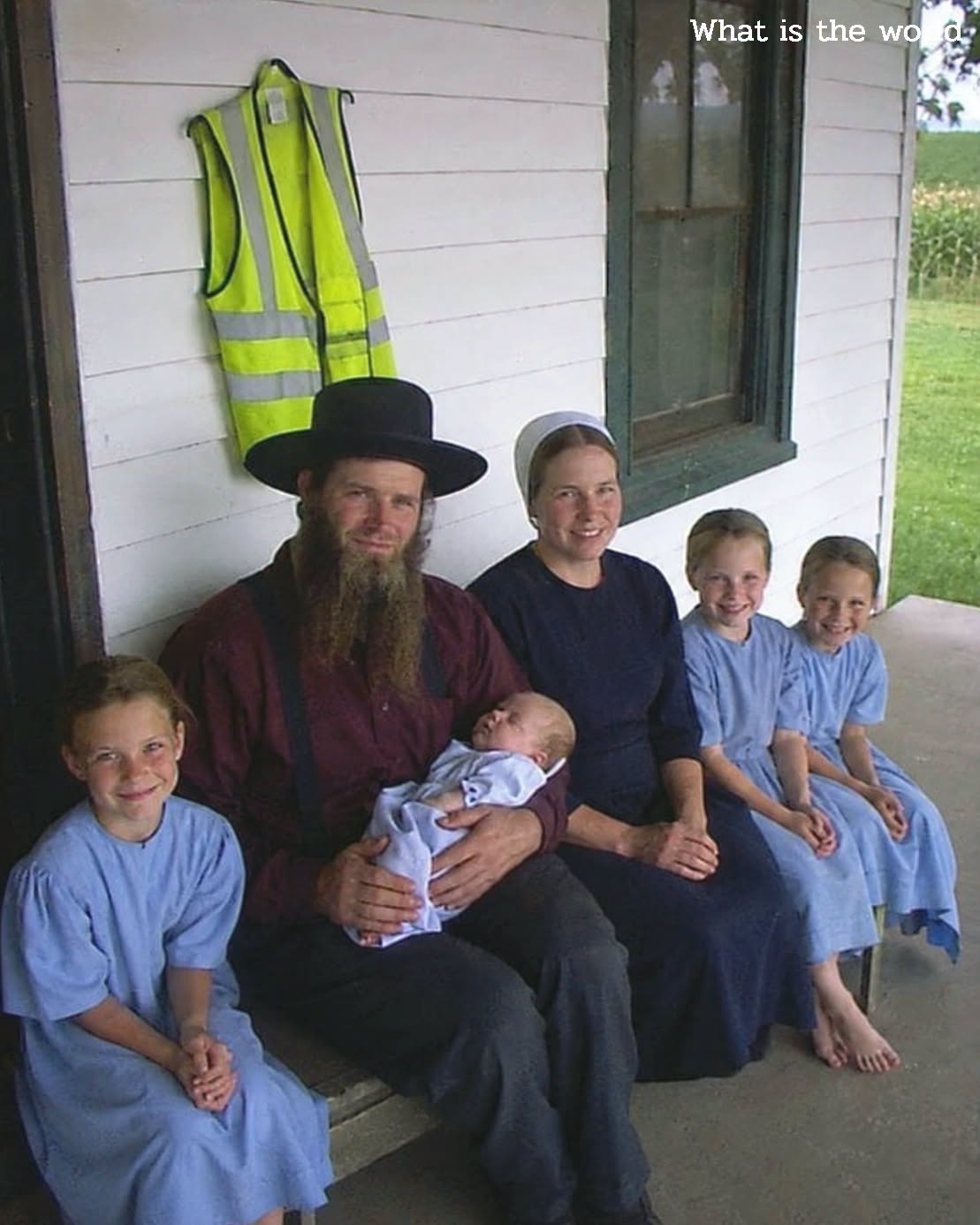
The Miller children—Aaron, Sarah, David, and Mary—all survived the ordeal but carry different scars.
Aaron Miller, now forty-seven, lives in Indiana with his wife and children. He’s a carpenter like his father, building furniture under his adopted name of Joseph Miller Jr. He declined to be interviewed for this article but released a statement through Detective Martinez:
“My father did what he had to do to protect us. I don’t blame him for running or for living under a false name. I blame the man who made him so afraid he felt he had no choice. I’m grateful my father kept us alive. That’s what matters.”
Sarah, forty-five, is a teacher at a Mennonite school in Kentucky. She’s more open about the family’s history, having written about the experience in a limited-circulation memoir published by a Mennonite press.
“We were children living in fear,” she writes. “We didn’t understand why we had to hide, why we had to leave, why we couldn’t go home. For years, I was angry at my parents for that. But as an adult, as a mother myself, I understand. They made impossible choices in an impossible situation. They saved our lives.”
David, forty-one, works as a blacksmith in Pennsylvania, having left the Amish community in his twenties to join a more progressive Mennonite church. He’s been the most vocal about the injustice of what happened.
“My family was terrorized by a criminal,” he says. “And the system that should have protected us—law enforcement, banks, lawyers—was inaccessible to us because of who we are. The Amish are vulnerable because they’re isolated. Predators know that and exploit it. That needs to change.”
Mary, now thirty-four, was too young to remember the events directly but has struggled with the revelation of her family’s history.
“I grew up thinking I was someone else,” she says. “Then I learned my name wasn’t even my name, my father had died under a false identity, my whole childhood was built on a lie. That’s hard to process. But I’m trying to understand that sometimes, survival requires dishonesty. My parents did what they had to do.”
All four children have reconnected with cousins and extended family in Ohio, though the relationships are complicated by decades of separation and the circumstances of their parents’ disappearance.
“It’s awkward,” Sarah admits. “They thought we were dead or taken. We thought we could never come back. Now we’re trying to be family again, but there’s this huge gap of time and experience we can’t bridge. We’re working on it.”
The Legacy
The Miller farm in Holmes County still stands, maintained now by the church district as a reminder of what happened. The hidden room remains accessible, preserved as it was found.
“We could have sealed it again,” Bishop Hochstetler says. “But we decided to leave it open. It’s a reminder that even in our community, there can be fear and injustice. It’s a reminder to watch out for each other.”
Visitors occasionally come to see the barn, though the Amish discourage tourism. A small wooden plaque near the concealed door reads simply: “In memory of the Miller family. May we learn to see those who hide in plain sight.”
Ruth Miller returned to Ohio once, in 2014, to visit the farm and the hidden room. She spent several hours there alone, praying and crying.
“It was like visiting a grave,” she says. “That room is where we lost our old lives. Where we became different people. Standing there again, I could feel how afraid we were, how desperate. But I also felt grateful. That room saved us. It gave us time to plan, to escape. Without it, I don’t know what would have happened.”
She placed a quilt in the room—a new one she’d made, decorated with patterns her children had drawn. It hangs there now, a splash of color in the darkness.
The broader impact of the Miller case has been significant in how law enforcement and social services approach isolated religious communities.
“The Millers taught us that isolation creates vulnerability,” says FBI Agent Morrison. “Communities that avoid mainstream systems—banking, legal, technology—are at risk of exploitation. But we can’t force them to change. What we can do is build bridges, create trusted contacts, make it easier for them to seek help when they need it.”