Several Ohio counties now have community liaisons who work specifically with Amish and Mennonite populations, providing resources and building trust that might make it easier for families in crisis to seek help.
“It’s slow work,” Detective Martinez says. “These are communities with centuries of tradition emphasizing self-sufficiency and separation from the world. You can’t change that overnight. But you can show them that sometimes, asking for help isn’t weakness—it’s wisdom.”
The Photograph
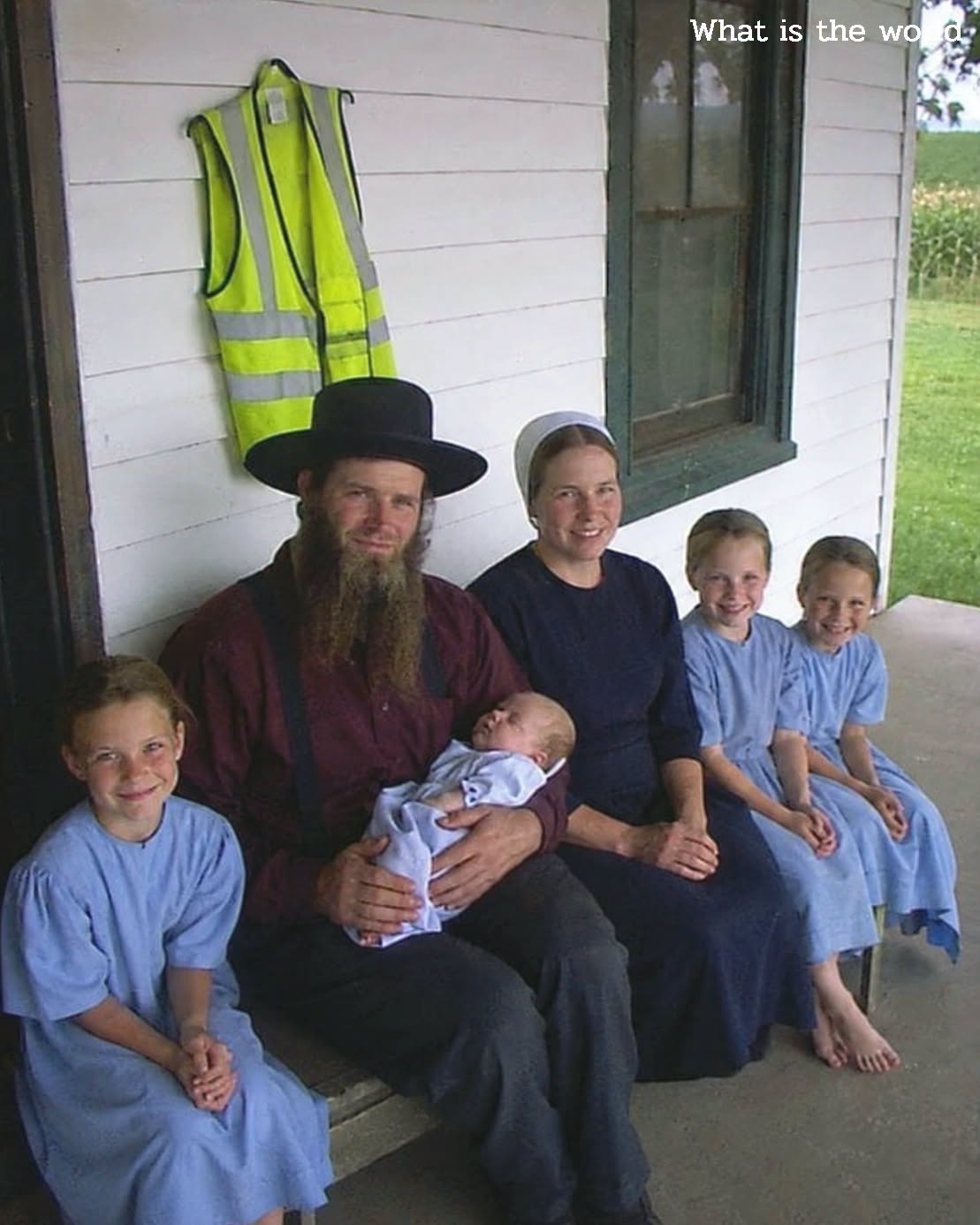
The photograph that solved the case—the image of the Miller family standing in front of their barn with the mismatched door visible behind them—now hangs in the Holmes County Sheriff’s Office, a reminder of how small details can unlock major mysteries.
“That door was hidden in plain sight for twenty years,” Sheriff Lawson says. “Everyone who looked at the barn saw a uniform wall. But the photograph showed the truth—something had been concealed. Without that image, without Esther Troyer noticing that one detail, we’d never have solved this case.”
The photograph principle—the idea that sometimes answers are visible but overlooked until the right perspective reveals them—has become part of cold case training in Ohio.
“How many other cases have the answer sitting in a photograph, a document, a witness statement, just waiting for someone to look at it the right way?” Martinez asks. “The Miller case teaches us to look again, to question assumptions, to pay attention to details that seem insignificant.”
Isaac Yoder, who brought the photograph to church that Sunday in 2012, still marvels at the chain of events.
“I almost threw that photo away,” he says. “I was cleaning out boxes, and I thought ‘why keep a picture of people who vanished?’ But something made me save it. Maybe God had a purpose for it. Maybe it was meant to solve this mystery.”
Twenty Years of Silence
What remains most striking about the Miller case is not the disappearance itself, but the twenty years of silence that followed—a family living in hiding, a community mourning a mystery, a predator dying unpunished, and truth waiting patiently to be discovered.
“Silence protected the Millers,” Dr. Weaver-Zercher reflects. “But it also isolated them. They couldn’t grieve their old life publicly, couldn’t maintain relationships, couldn’t be fully known even in their new community. That’s a terrible price to pay for survival.”
Ruth agrees. “We were alive, but we weren’t free,” she says. “We carried fear and secrets every day. The children grew up not knowing who they really were. Jacob died without ever returning home. That’s what Benton took from us—not just our farm, but our identity, our community, our truth.”
The question of whether the Millers should have sought help rather than fleeing is one Ruth still wrestles with.
“Should we have gone to the police? Should we have told the bishop? Should we have fought Benton in court?” she asks. “Maybe. But we were afraid. We were Amish—we didn’t know how the English legal system worked. We didn’t have money for lawyers. Benton seemed so powerful. Running felt like our only choice.”
Dr. Weaver-Zercher notes this is common in isolated communities: “When you don’t trust or understand the outside system, when your culture emphasizes handling problems internally, when you’ve been taught that involving outsiders is a form of failure—getting help becomes incredibly difficult. The Millers weren’t weak or foolish. They were navigating an impossible situation with limited options.”
The Unanswered Questions
Even with Ruth’s testimony and the evidence collected, some questions remain unanswered.
What exactly did Benton threaten to do if the Millers didn’t leave? Ruth says he made veiled references to consequences for the children, but never explicit threats. Were these actual threats of violence, or just intimidation? We’ll never know—Benton is dead, and no witnesses heard the worst of his statements.
Why didn’t Jacob seek help from law enforcement? Ruth says they were afraid Benton would retaliate before police could act. But was this fear justified, or a misunderstanding of how the system works? Could the police have protected them if they’d known?
Did Benton actually acquire the Miller farm after they left? Property records show the farm was eventually sold for back taxes in 1995, three years after the disappearance. Benton’s records show no ownership transfer, suggesting he may not have followed through on taking the property—possibly because the mysterious disappearance drew too much attention.
Are there other families who fled from Benton or similar predators? The investigation identified several suspicious cases, but without witnesses coming forward, these remain speculative.
“We’ll probably never have complete answers,” Detective Martinez says. “But we have enough to understand what happened and why. Sometimes that’s all you get.”
Epilogue: The Mismatched Door
Today, if you visit the Miller farm in Holmes County—which you shouldn’t, as it’s private property maintained by the Amish church—you’ll find that the barn’s east wall has been partially restored. The hidden door is visible now, painted a slightly different color than the surrounding wood, deliberately preserved as evidence of what happened.
Above the door, a simple wooden sign reads: “Fear not, for I am with you.” – Isaiah 41:10
It’s a message to visitors, but perhaps more importantly, it’s a message to the Miller family wherever they are—a reminder from their community that they were never truly alone, even in their darkest moments of fear.
Esther Troyer, now eighty-four, visits the farm occasionally to maintain the quilts Ruth left in the hidden room. She keeps them clean, repairs them when they fray, ensures they survive as testimony.
“Ruth was my friend,” Esther says. “I should have known she was in trouble. I should have seen the signs. But I didn’t. This is how I honor her now—by taking care of what she left behind, by making sure her story is remembered.”
The story has become part of Amish oral tradition, told carefully at church gatherings as a cautionary tale about the dangers that can threaten even the most devout communities.
“We tell our young people about the Millers,” Bishop Hochstetler says. “Not to frighten them, but to teach them. We teach them that seeking help isn’t weakness. That protecting family sometimes means breaking traditions. That survival matters more than pride.”
Ruth Miller, now sixty-two, still lives in Kentucky. She quilts for a living, attends church regularly, and has begun speaking at Mennonite and Amish gatherings about domestic abuse, financial exploitation, and the importance of seeking help.
“I spent twenty years silent,” she tells audiences. “I was silent when my husband was threatened. Silent when we hid. Silent when we fled. Silent for two decades after. That silence protected us from Benton, but it also trapped us. I’m not silent anymore. If my voice can help even one family seek help instead of hiding, then maybe all those years meant something.”
Her children are healing. Her grandchildren—she has nine now—know the full story of their family’s history. The Miller name has been reclaimed. The truth, finally, has been told.
And it all started with one detail in one photograph: a barn door that didn’t quite match, noticed by someone who remembered, leading to a hidden room that told a story of fear, survival, and the terrible price of silence.
“Mystery solved,” Sheriff Lawson says, looking at the photograph hanging in his office. “But justice? I’m not sure we ever achieved that. Benton’s dead. The family lost twenty years of their lives. You can solve a mystery without getting justice. Sometimes that’s just how it works.”
Perhaps. But the Millers survived. They’re alive, they’re together, and their story is finally known. In the end, that might be the only justice that matters.