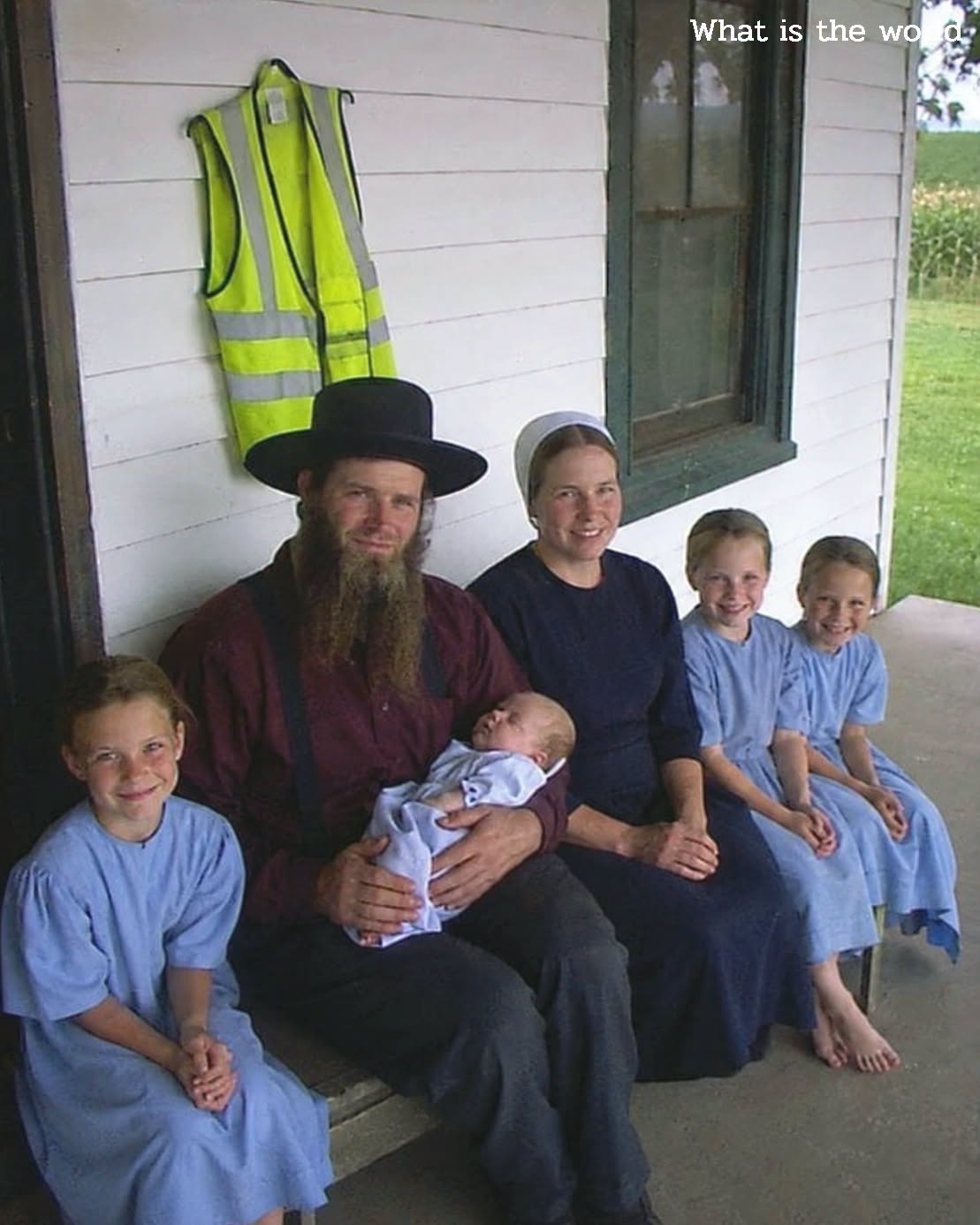
“We thought we’d only stay a year or two,” Ruth says. “We thought maybe after Benton forgot about us, we could go home. But years passed. The children grew. We built a new life. And Jacob was afraid that if we ever went back, Benton would find us.”
So they stayed. Joseph and Rebecca Miller raised their children, worked hard, attended church, and never spoke about Ohio or their former life.
“The guilt was terrible,” Ruth says, crying. “We’d abandoned our community, our church, our families. We’d left under false pretenses, living under false names. The Amish don’t do such things. We’re honest people. But Jacob said it was better to be alive and ashamed than righteous and dead.”
When Jacob died in 2001, Ruth considered returning to Ohio and confessing everything. But by then, her children had built lives in Indiana. Aaron was married with children of his own. Sarah had joined a Mennonite church and was teaching school. David was apprenticing as a blacksmith. They’d all survived the trauma of their childhood, built healthy lives, and Ruth didn’t want to disrupt them.
“I thought I’d take the secret to my grave,” she says. “I thought it was better that way. But when the detective came to my door and said they’d found the hidden room, I knew God was telling me it was time to tell the truth.”
The Reckoning
Ruth’s testimony in 2013 solved the Miller disappearance but raised new questions about justice and accountability.
Charles Benton had died in 2005, so criminal charges were impossible. But investigators reviewed his records and found evidence of similar patterns with other Amish families—loans with predatory terms, threats, forced departures.
“Benton operated for decades targeting people who couldn’t fight back,” says Attorney General Eric Holder, who reviewed the case. “The Amish don’t use lawyers, don’t sue, don’t involve law enforcement in community disputes. He exploited that. He was a predator hiding in plain sight.”
At least seven other Amish families had borrowed from Benton under similar terms between 1975 and 1995. Three had lost their farms to foreclosure. Two others had left Ohio under circumstances that now seemed suspiciously similar to the Millers’ disappearance.
“We think there are other families out there who fled,” Detective Martinez says. “Other families living under assumed names, hiding from debts or threats. The Miller case might not be unique—it’s just the one that got solved.”
For the Holmes County Amish community, Ruth’s revelation was both relief and trauma.
“We mourned the Millers for twenty years,” Bishop Hochstetler says. “We prayed for them, remembered them, told stories about them. To learn they were alive all that time, that they’d been so afraid they felt they couldn’t even tell us—that’s painful. It means we failed them. We should have protected them from Benton.”
The community held a prayer service for Ruth and her family—not celebrating their survival, but mourning what they’d lost and asking forgiveness for not seeing the danger.
“The Amish community is close-knit, but we’re not perfect,” Dr. Weaver-Zercher explains. “We can miss signs of abuse, financial exploitation, domestic violence. The Miller case forced a reckoning with that reality.”
In the years since, the Holmes County Amish community has developed informal networks to help families facing financial difficulties, created peer counseling systems to identify families in crisis, and—in some cases—become more willing to involve outside authorities when threats occur.
“We can’t let pride or tradition prevent us from protecting our families,” Bishop Hochstetler says. “That’s the lesson from the Millers.”
The Children