The supernatural theory: In a community where faith is central and miracles are believed in, some whispered about divine intervention. Perhaps the family had been taken by God, raptured like Elijah in his chariot.
Bishop Hochstetler gently but firmly discouraged such speculation. “God does not work that way,” he told his congregation. “We must trust in His plan, but we must also face reality.”
The reality was that six people had vanished completely, leaving behind a farm frozen in time and a community haunted by unanswered questions.
By August 1992, the active investigation was scaled back. The case remained open, but with no new leads and no evidence of foul play, there was little more investigators could do.
“We never closed the case,” Lawson emphasizes. “But without leads, without evidence, we had nowhere to go. I thought about the Millers constantly for years. It was the one case I couldn’t solve, the one that kept me up at night.”
The Miller farm stood empty, eventually acquired by the church district and maintained but not occupied. The Amish community held a prayer service for the missing family, asking God to watch over them wherever they were and to grant their community peace with the mystery.
Years passed. A decade. Then another. The Miller disappearance became a ghost story, a cautionary tale, a piece of local folklore whispered about but never solved.
Until 2012, when a carpenter named Isaac Yoder brought an old photograph to church.
The Photograph
Isaac Yoder had been sorting through boxes in his attic, organizing old papers and photographs, when he found the image of the Miller family. It had been taken in September 1991, about ten months before their disappearance, during a community work bee to help Jacob raise a new addition to his barn.
“I’d forgotten I had it,” Yoder tells me. “We’d taken several photographs that day documenting the work. Most Amish avoid having their pictures taken for personal use, but we sometimes photograph work projects for practical reference.”
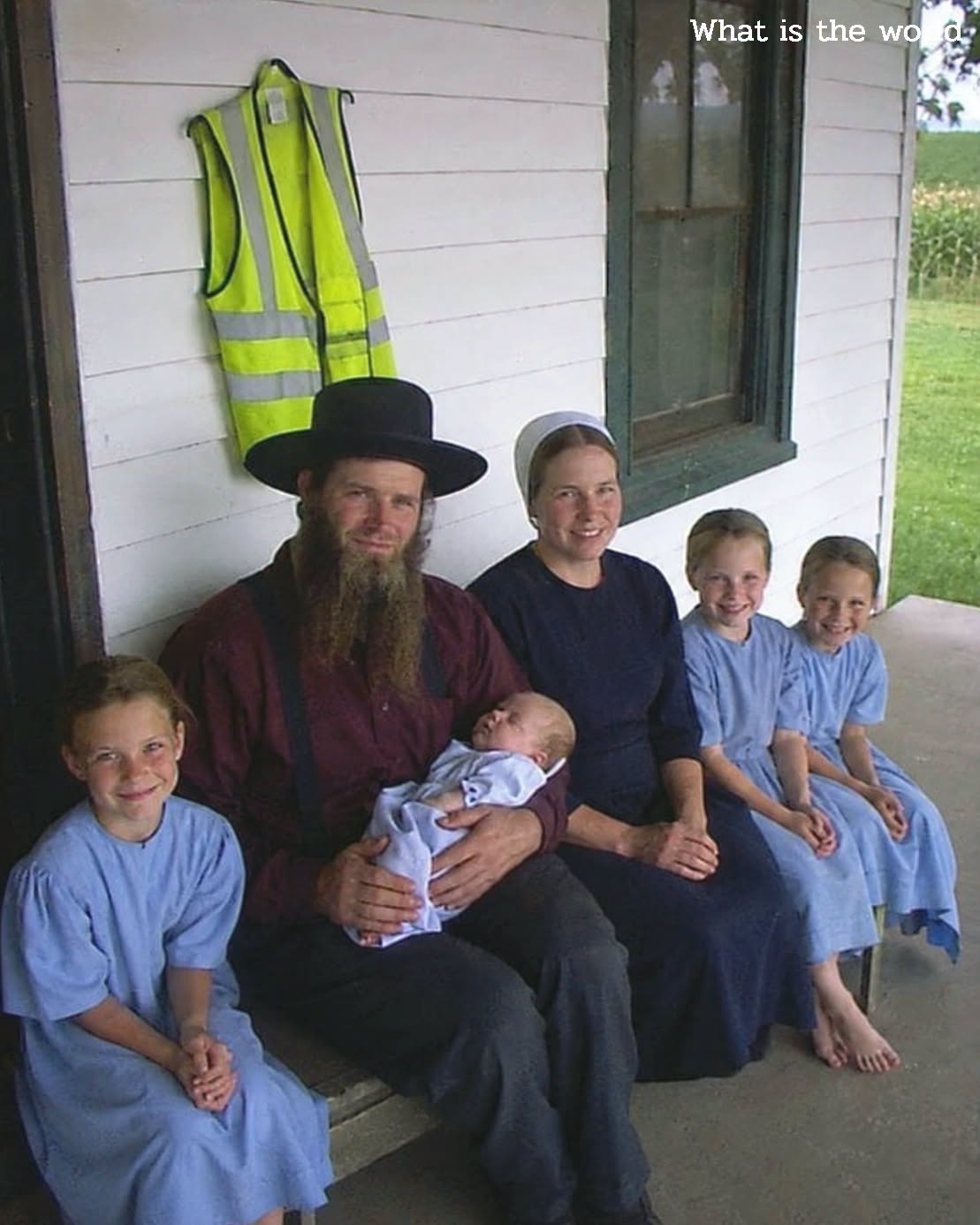
The photo showed the Miller family standing in front of their barn’s east wall. Jacob’s hand rested on Aaron’s shoulder. Ruth held baby Mary. The older children stood between their parents. Behind them, the barn’s red paint gleamed in autumn sunlight.
Yoder brought the photograph to a Sunday gathering in May 2012, planning to use it as part of a sermon about community and how we must care for each other. When he held up the image, several older community members grew emotional, remembering the Millers and the unresolved mystery of their disappearance.
Esther Troyer, who had been a close friend of Ruth Miller’s, asked to look at the photograph more closely. She studied it for several long minutes, her expression growing increasingly puzzled.
“That door,” she finally said, pointing to the barn. “The wood doesn’t match.”
Others gathered around. In the photograph, the barn’s east wall showed a door that appeared newer than the surrounding wood—the boards were lighter in color, the paint fresher. It was subtle but noticeable once pointed out.
Several men who knew the current state of the Miller property—it