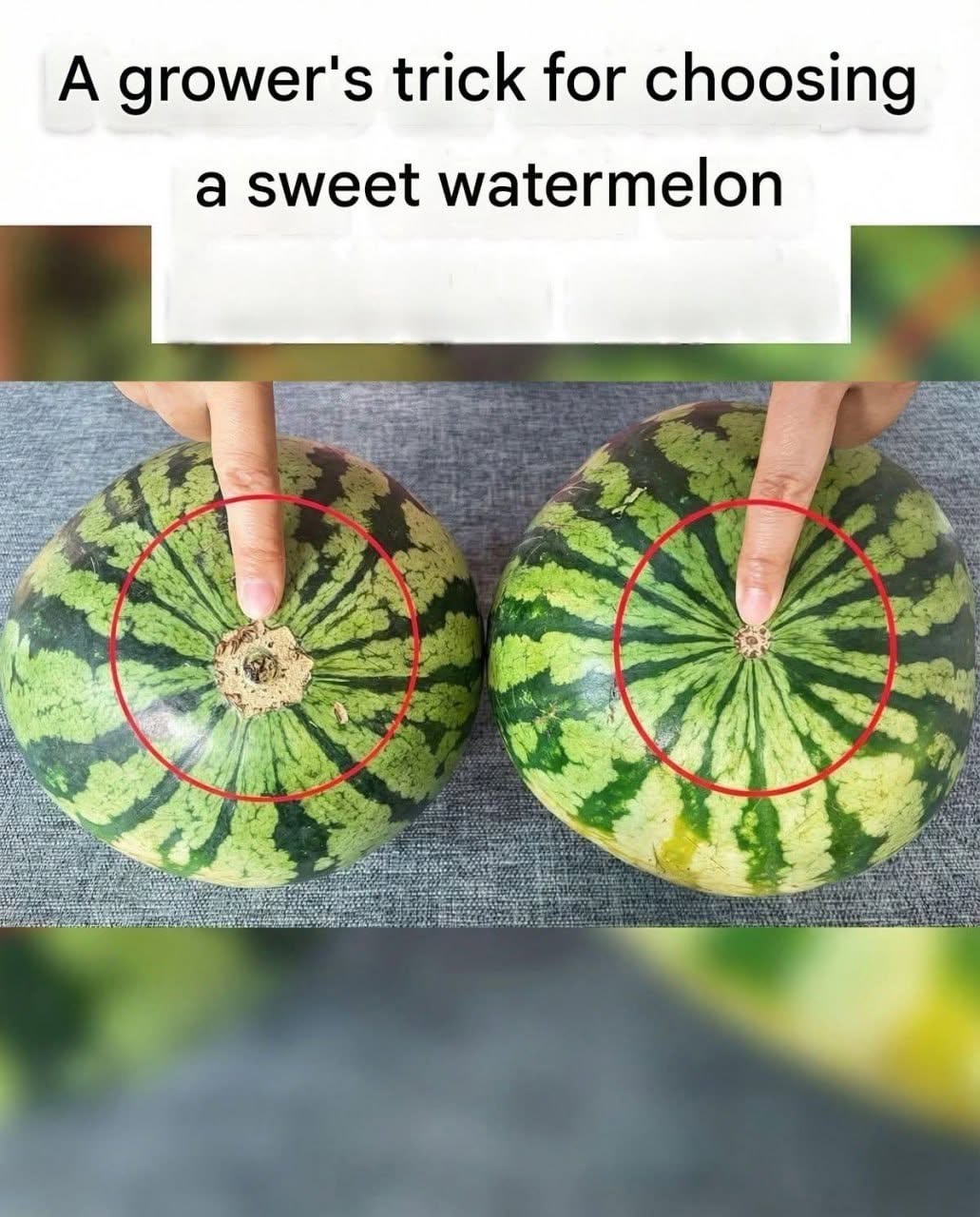
A watermelon’s navel can also indicate its quality. You’ll notice that some navels are large, others small. It’s recommended to choose watermelons with a small navel. The smaller the navel, the thinner the skin, indicating good ripeness. A watermelon with a large navel may have been picked too early or chemically treated.
Anatomy Today we’ll talk about the iconic summer fruit: watermelon. As temperatures rise, these large, juicy fruits are flooding the markets. There’s nothing better than a refreshing, ice-cold watermelon to cool off. Unfortunately, choosing a sweet watermelon can be difficult, and no one likes to discover they’ve spent their money on a bland one. Fortunately, there are simple yet effective ways to choose the perfect watermelon. Here are a few proven methods to ensure you never make the same mistake again:
Watermelons:
Look at the outside of the watermelon.
The first thing to notice is the color. Naturally ripe watermelons are a dull green, without excessive shine. The green should be relatively dark. On the other hand, if the watermelon has a grayish hue or is very light green, it may be less sweet and its flesh may be flavorless.